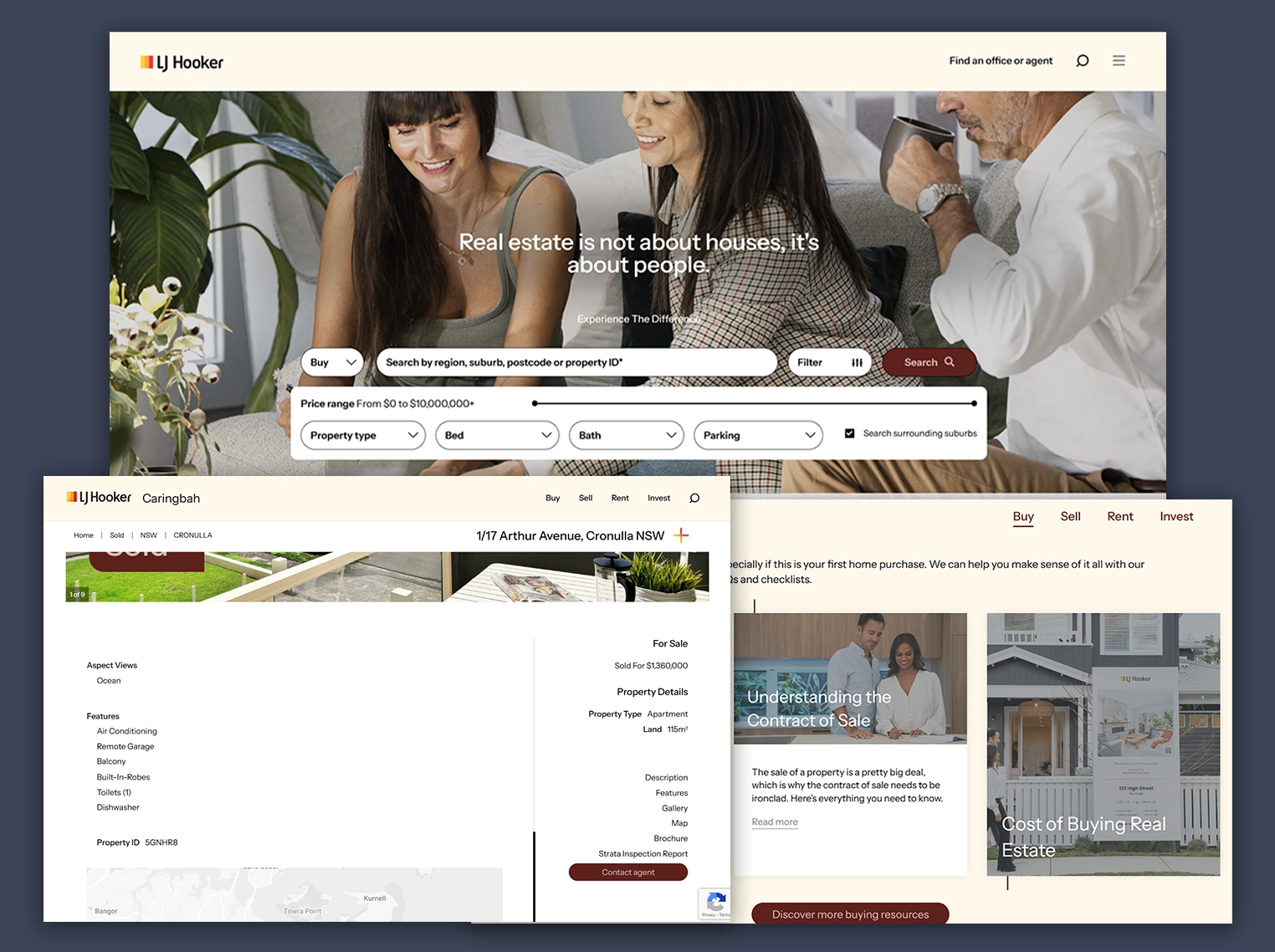
Project Overview: A Platform for 400+ Businesses
LJ Hooker is one of the largest real estate networks in Australia and New Zealand, with over 400 franchise offices. They needed to migrate their corporate site and entire franchise network to a single, unified platform on the HubSpot CMS.
The challenge was enormous: how to create a single system that was powerful enough for corporate, yet flexible enough to empower 400+ individual small business owners (the franchise offices) to manage their own local content, listings, and marketing?
As the sole frontend developer on this multi-year project, my role was to architect, build, and integrate the entire user-facing experience for both the corporate site and the franchise templates.
The Core Challenge: Scale Meets Usability
This project had three core technical and usability challenges:
- Massive Scale: The platform had to serve as a multi-tenant solution. A change to a "property listing" component needed to safely roll out to all 400+ sites without breaking them.
- Editor Experience: The end-users were not developers. They were local real estate agents and marketing managers who needed the ability to build beautiful, on-brand pages with zero technical knowledge.
- Complex Integrations: The site had to pull in data from multiple sources: the HubSpot CRM for contacts, and a third-party API for all property listings, agent data, and office information.
My Solution: A "Modular-First" Architecture
To solve these challenges, I designed the entire system around a "modular-first" philosophy. Instead of building static pages, I architected and built a comprehensive library of over 80+ reusable components.
Think of this as a custom-built "Lego" set for the LJ Hooker team.
This library included everything from simple "Hero Banner" and "Text Block" components to complex, data-driven modules like:
- "Featured Property" carousels
- "Agent Search" blocks
- "Office Location" maps with API integration
- Dynamic "Listing Grids" with filterable search
Each module was built with HubSpot's HubL templating language, deeply integrated with the CMS editor. This meant an editor could simply drag a component onto a page, fill in a few user-friendly fields, and the module would render perfectly, pulling in the correct data and styling.
This approach was the key to balancing scale and usability. It gave editors the freedom they needed within a framework that guaranteed brand consistency and W3C-validated, SEO-friendly code.
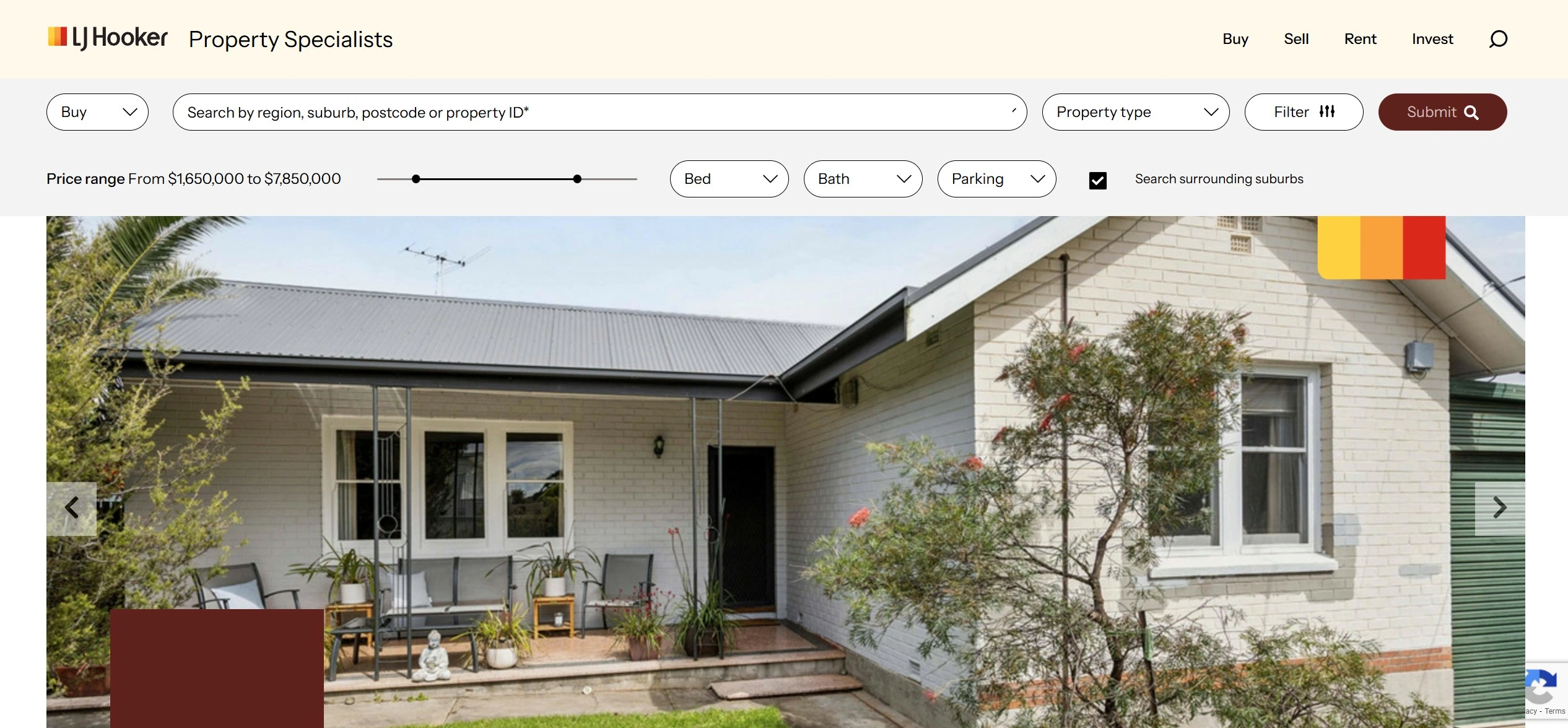
Process, Collaboration, and Learning
A project of this scale is a team sport. While I was responsible for the entire frontend architecture, I worked as a central point of contact between several teams:
- Collaboration: I collaborated daily with a Senior Backend Developer on data models and a dedicated API developer to design and integrate the search APIs. My role was to translate their complex data endpoints into functional, high-performance UI components.
- Communication: I worked directly with the Project Manager and stakeholders from both the Indonesian and Australian LJ Hooker teams, providing technical updates and turning business requirements into feasible frontend features.
- Adaptability: When I joined the project, I had no prior experience with the HubSpot CMS. I took on the challenge, dove into the documentation, and quickly learned the ins and outs of HubL, its CRM, and its data integration capabilities. This self-learning enabled me to architect the entire theme from the ground up and eventually help maintain the platform's "Business As Usual" (BAU) updates.
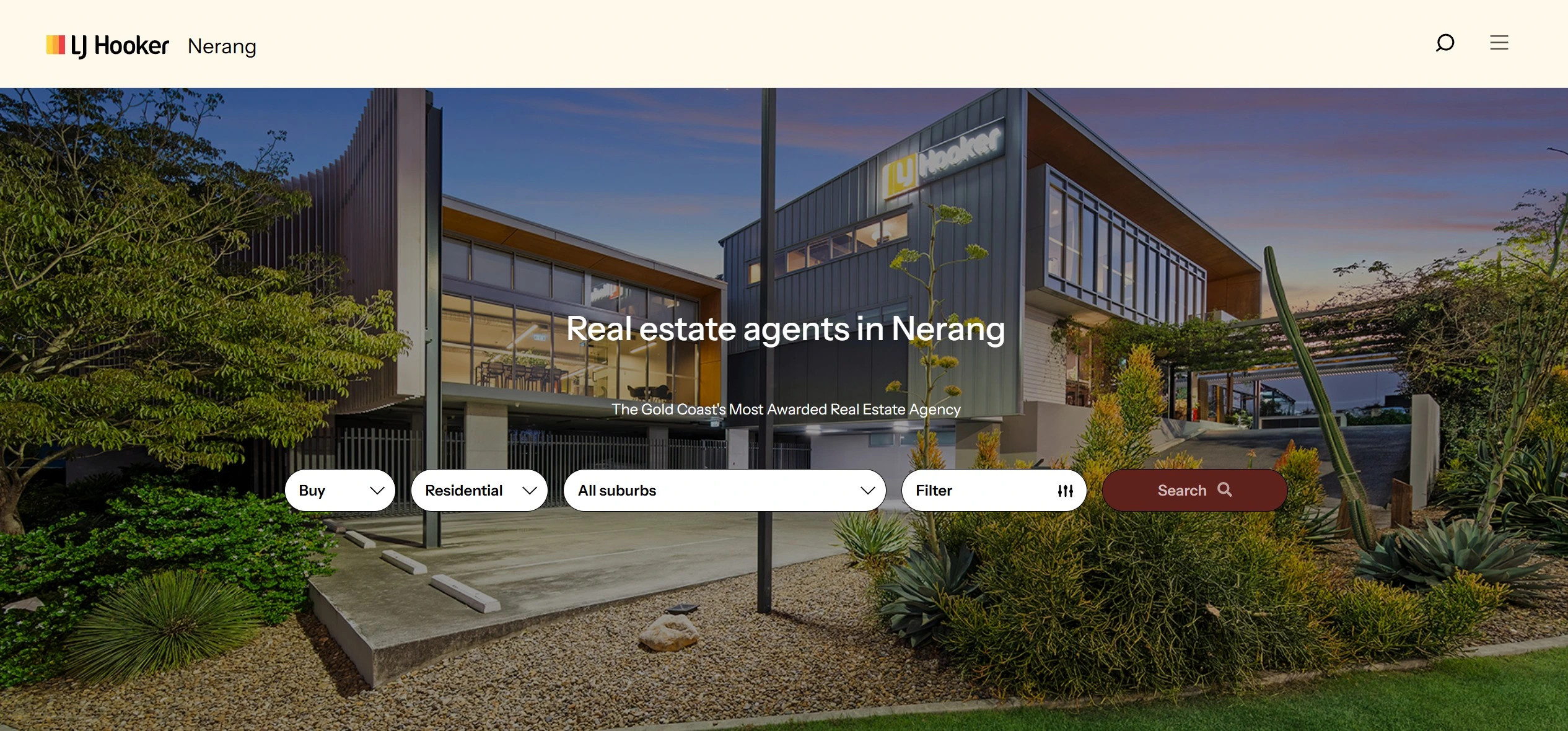
The Outcome: Empowerment at Scale
Over a three-year period, we successfully launched the new corporate platform and rolled it out to all 400+ franchises across Australia and New Zealand.
The new system is a "win-win" for both the central corporate team and the local offices.
For LJ Hooker (The Client):
- Empowerment: They now have a platform where local marketing managers can build and launch their own campaigns without developer intervention, drastically speeding up time-to-market.
- Brand Consistency: The modular system ensures every one of the 400+ sites is perfectly on-brand and mobile-responsive.
- Scalability: The unified theme means a single bug fix or feature update can be deployed network-wide in one go.
For Me (The Developer):
- Technical Growth: This project was a deep dive into large-fscale system architecture. I proved I could not only learn a new, complex CMS on the fly but also become the expert who could architect its entire frontend.
- Impact: Knowing my work is the foundation for over 400 businesses and is used daily by thousands of agents and customers is incredibly rewarding. It was a true test of building for performance, reusability, and, most importantly, for the human end-user.